How to Make Simple Outfits Look More Interesting
A simple outfit can be exactly what you want to wear and still feel like it is missing something.
Maybe it is jeans and a knit you have worn dozens of times. A plain dress. A skirt and top that work perfectly well together but somehow look flatter in the mirror than they did in your head.
The first instinct is often to add something — or buy something. But before doing either, it is worth looking at the outfit itself.
A small change in proportion, color, texture or detail can make familiar clothes feel surprisingly different. Here are six places to start.
Change the Proportion
Start with the shape of the outfit.
Sometimes nothing is wrong with the individual pieces; they simply sit together in the most predictable way possible.
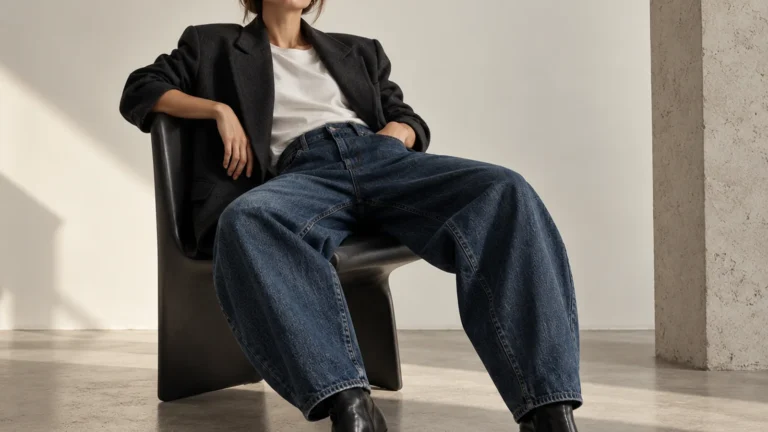
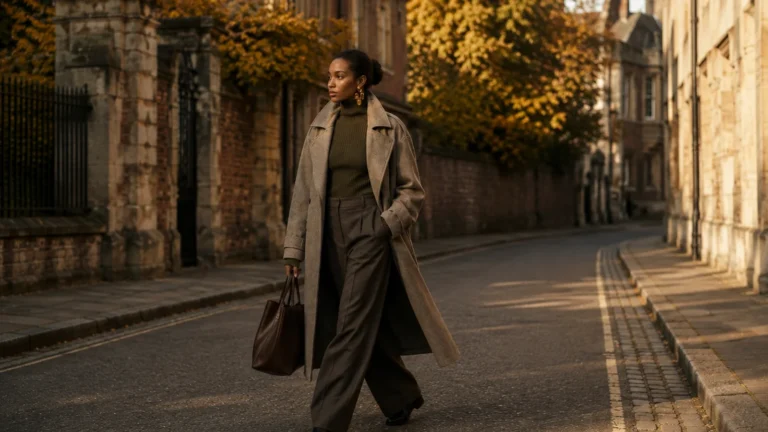
Try pushing up the sleeves of an oversized knit. Leave a shirt untucked instead of automatically tucking it in. Wear a shorter jacket with a fuller skirt, or let a longer cardigan fall over a straighter pair of jeans. Even changing where a top ends can alter the whole silhouette.
There is no universal rule that volume on top requires something narrow underneath. What matters is seeing the pieces in relation to one another.
Before adding another accessory, spend a minute changing the silhouette. It may be all the outfit needed.
Shift the Color Story
If you mostly wear neutrals, you do not suddenly need five bright colors.
One is enough.
Try burgundy with black, deep green with charcoal, muted blue beside cream, or a small amount of warm gold against darker clothes. It does not even have to be a bright color. A muted tone can be enough to wake up an otherwise neutral outfit.
The useful part is deciding what each color is doing.
A grounding neutral — black, navy, charcoal, brown — can carry most of the outfit while another color changes its character. And the balance does not need to be 50/50. Sometimes the most interesting color appears only in a cardigan, a bag or a pair of shoes.
If you want somewhere to start, our Color Guide breaks down combinations by the role each color plays.
Look at Texture Before Adding More Color
This is easy to miss because we tend to notice color first.
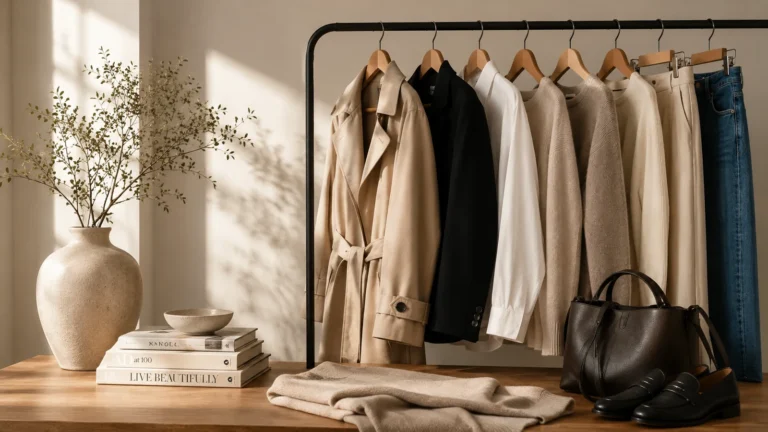
Imagine an outfit made almost entirely from cream: a fine knit, washed cotton and smooth leather. The colors are close, but the surfaces are doing different things with the light. The outfit has depth without needing a print or another strong shade.
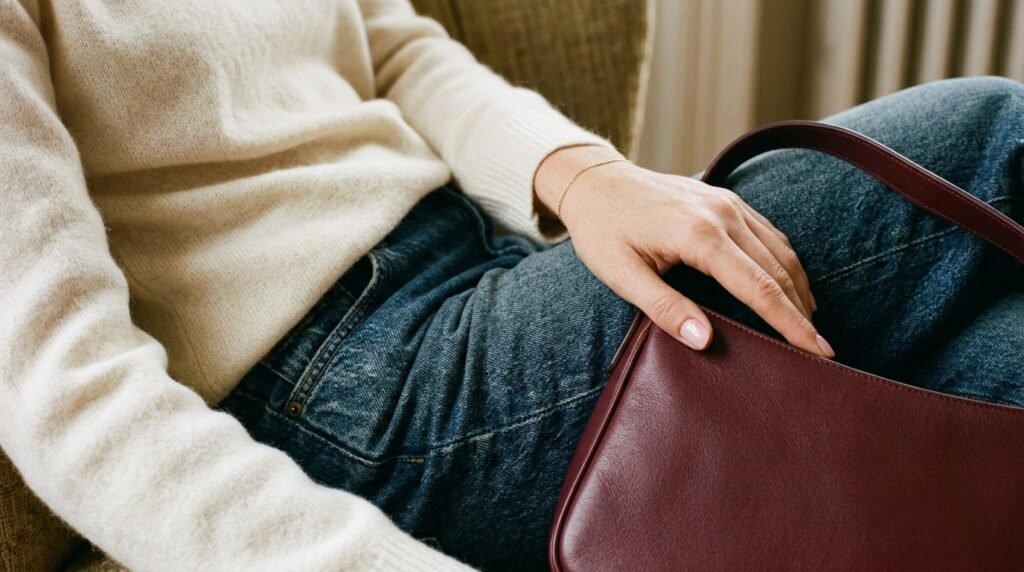
The same works with denim and soft knitwear, wool and leather, or a fluid skirt under a heavier sweater.
Run your hand over the clothes if you have to. If everything feels and looks roughly the same, that may be why the outfit feels flat.
This is especially useful with monochromatic looks, where texture can do much of the work normally done by color.
Our Fabric & Care Guide is useful here if you want to understand how different materials behave beyond how they look on a hanger.
Give the Eye Somewhere to Land
Put on a simple outfit and look at it from a few steps away.
Where does your eye go first?
If the answer is nowhere in particular, give it one destination.
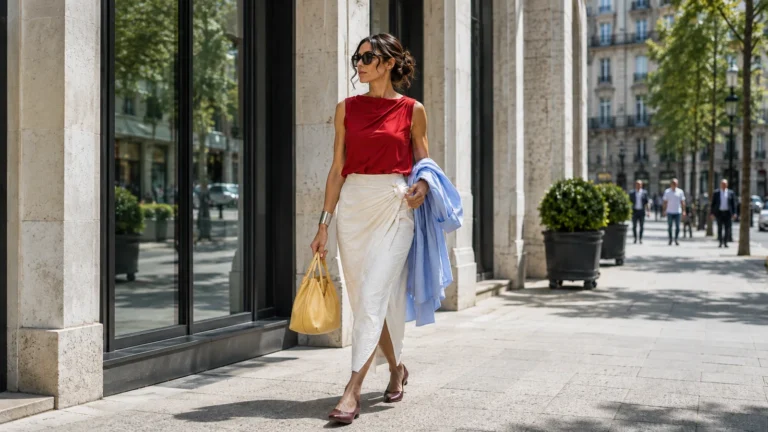
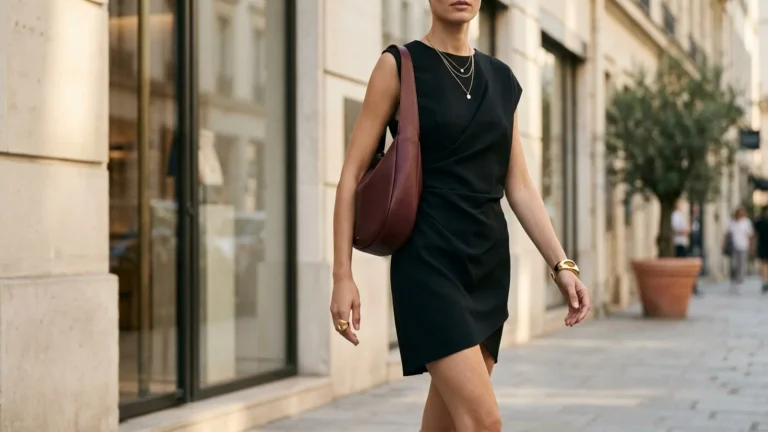
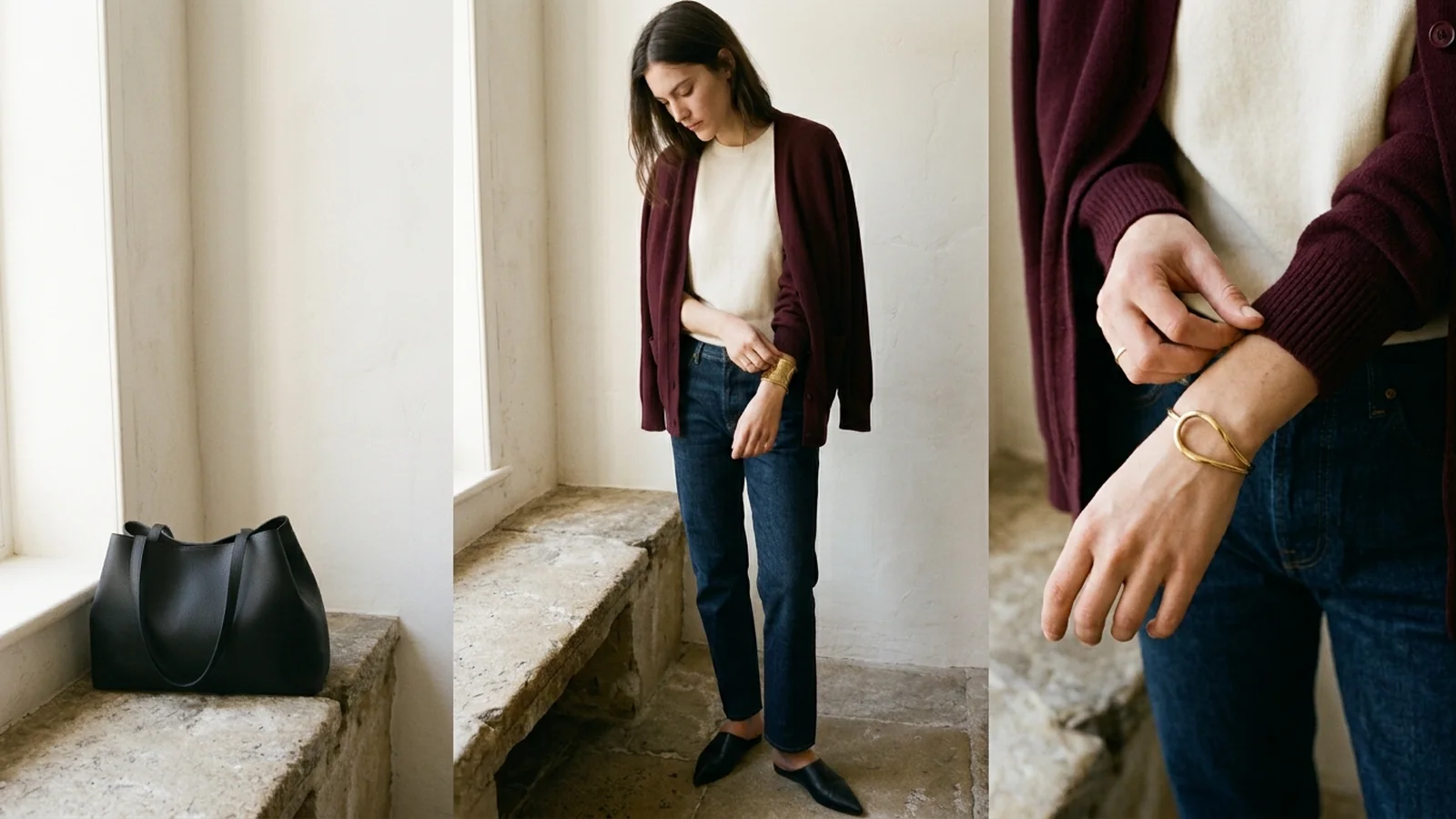
That could be a cuff against a plain sleeve, a belt across a long cardigan, an unusual bag with jeans and a knit, a brooch on an otherwise simple jacket, or shoes that change the mood of a dress.
Accessories are particularly good at this because you can change the character of clothes you already own without changing the clothes themselves.
The important part is knowing when to stop. If the bracelet is the point, the earrings, belt, bag and shoes do not all need to compete with it.
ARANEMI PICK
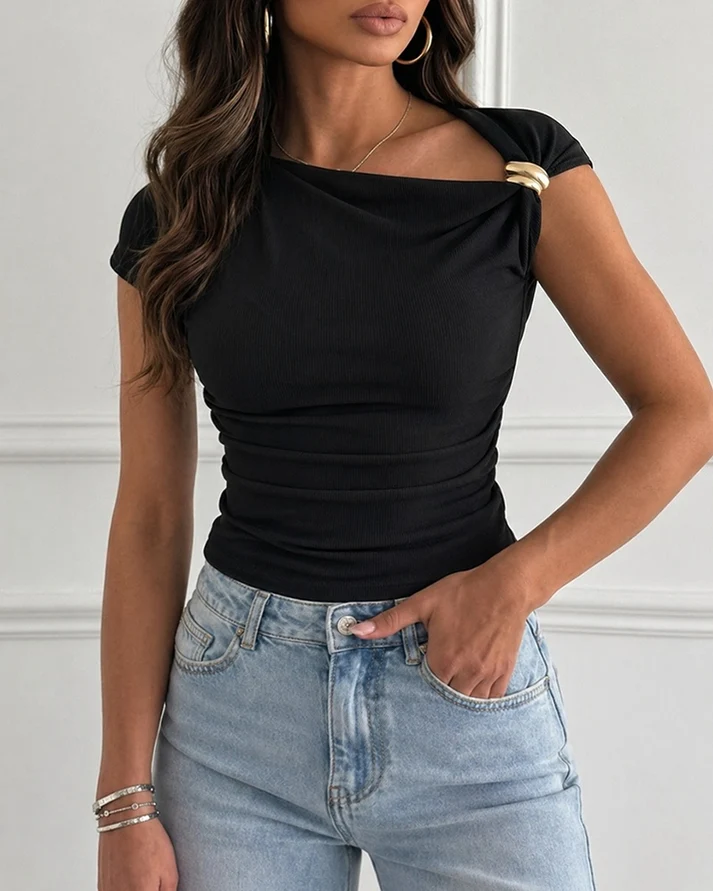
Asymmetric Ruched Knit Top
The asymmetric neckline and small gold buckle give a simple black knit a clear point of focus without asking much else from the outfit
ChicMe · $17.99
Affiliate note: We may earn a commission if you purchase through this link, at no extra cost to you.
Repeat Something
Repetition is one of those styling ideas that often works before you even notice why.
A burgundy cardigan might connect with a similar tone in a bag. Gold earrings can quietly echo the hardware on a belt. Black shoes can pick up a dark detail elsewhere in the outfit.
The elements do not need to match exactly. In fact, they usually look more natural when they do not.
What matters is that something appears twice. That small visual connection can make separate pieces feel like they belong to the same outfit rather than simply being worn at the same time.
Look for these echoes after you are dressed. Often they are already there — you just need to notice them.
Leave One Thing Undone
An outfit does not have to look completely resolved to look considered.
Sometimes the thing that makes simple clothes feel personal is a little looseness: an open collar, sleeves pushed up unevenly, a scarf tied without perfect symmetry, a shirt only partly tucked in.
This is different from trying to make an outfit look deliberately messy. The point is simply not to correct every small irregularity.
Clothes move when we wear them. They crease, shift and fall differently throughout the day. Allowing some of that to remain can make an outfit feel less arranged and more like your own.
If everything looks a little too finished, try undoing one thing rather than adding another.
Before You Buy Something New
When a simple outfit feels boring, it is tempting to assume the clothes are the problem.
Sometimes they are. But often the better question is: have you tried enough with what you already have?
Change the proportion. Introduce one color. Mix the textures. Give the eye a focal point. Repeat a detail. Leave something slightly undone.
None of these ideas requires rebuilding your wardrobe. They are simply ways of looking at familiar clothes differently.
If you are not sure which pieces are still worth working with, the Wardrobe Audit can help you decide what deserves a place in your wardrobe.
And that is often where personal style starts — not with having more options, but with seeing more possibilities in the ones you already have.