The Details That Make an Outfit Feel Current
Some outfits look contemporary without containing a single obvious trend. Others are made from perfectly good pieces and still somehow feel slightly dated.
The difference is rarely one dramatic item.
More often, it comes down to a series of smaller decisions: where a hemline falls, how fabric moves around the body, the shape of a bag, the relationship between two colors, or the amount of jewelry added before the look begins to feel overworked.
This is what makes getting dressed interesting. Clothes do not exist independently. A familiar piece can feel entirely different when its proportions, styling and surroundings change.
The goal, then, is not necessarily to make a wardrobe more fashionable. It is to understand which details make familiar clothes feel relevant now — and which ones quietly pull them backwards.
1. Silhouette Comes First
Before color, accessories or styling, there is silhouette.
It is often the first thing we register about an outfit, even if we cannot immediately explain why something looks current or dated.
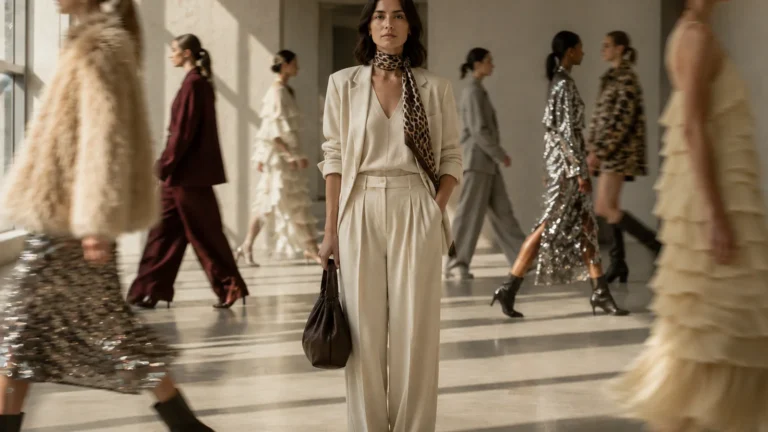
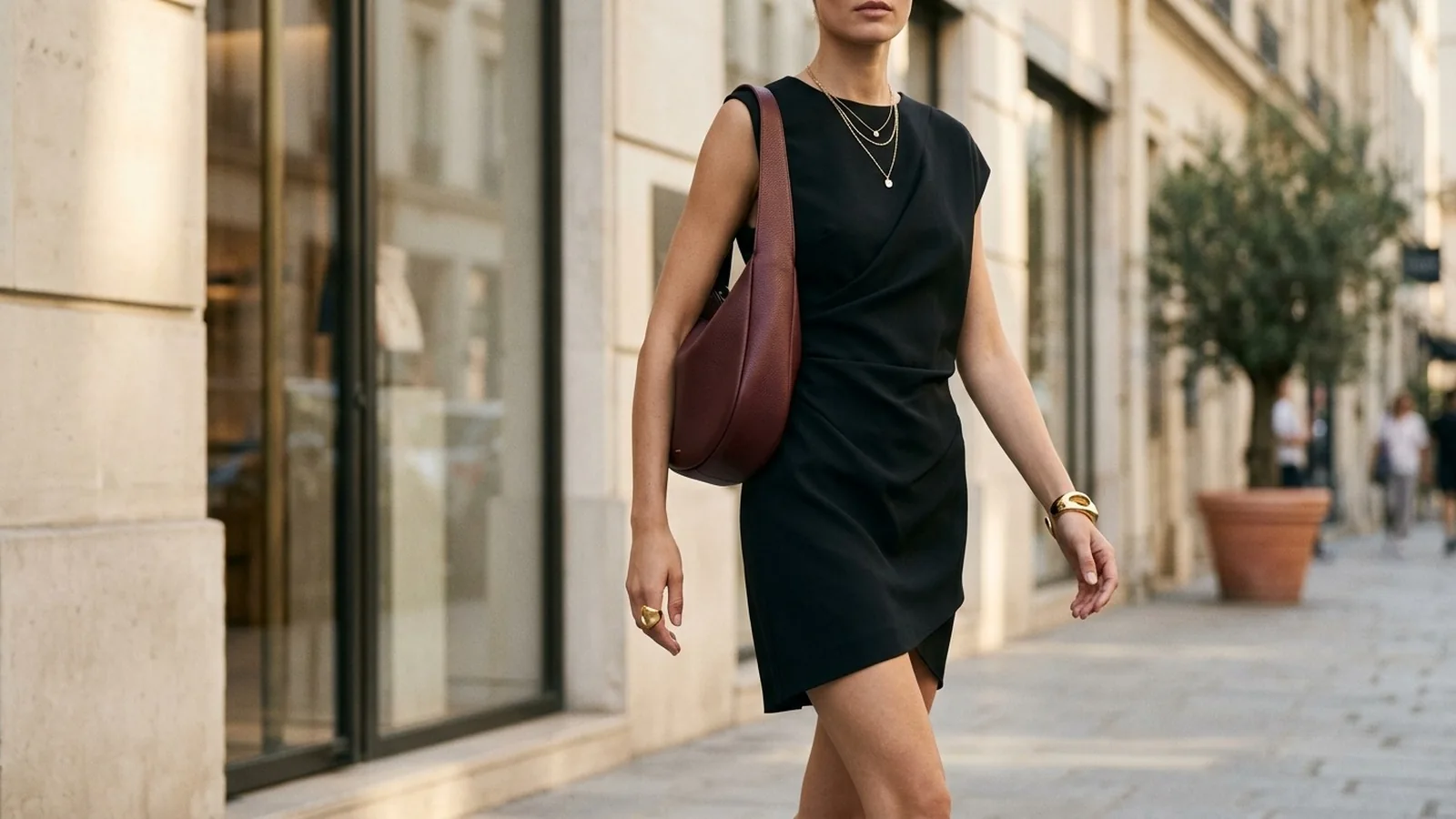
Consider a black dress. The idea itself could hardly be more familiar. But change the construction — introduce an asymmetric hem, a controlled drape through the waist, a slightly unexpected shoulder or a less rigid relationship with the body — and the entire impression changes.
The difference is subtle but important.
A contemporary silhouette does not necessarily mean oversized, exaggerated or unusual. In many cases, it simply means that the garment does not follow the most predictable version of its category.
A shirt can be slightly longer and less fitted. A jacket can have a stronger shoulder but a relaxed body. A skirt can fall away from the hips rather than tracing them precisely. Trousers can gain volume without becoming dramatically wide.
These small changes affect the visual language of the whole outfit.
This is also why replacing clothes purely because they are “old” rarely makes sense. Sometimes the piece is still good; it is the way its proportions interact with everything around it that needs reconsidering.
The useful question is not “Is this still in fashion?”
It is:
“Does this silhouette still create the shape I want?”
That distinction makes a wardrobe much easier to edit.
2. One Color Can Change the Entire Look
Neutral outfits are easy to build. They are also easy to make predictable.
Black with black. Beige with cream. Denim with white. All of these combinations work — which is precisely why they can sometimes feel automatic.
Introducing one less obvious color often changes far more than adding another statement piece.
Take black and burgundy.
A black dress paired with a black bag would create a clean, uninterrupted line. There is nothing wrong with that combination, but the result would be more expected.
Deep burgundy does something different.
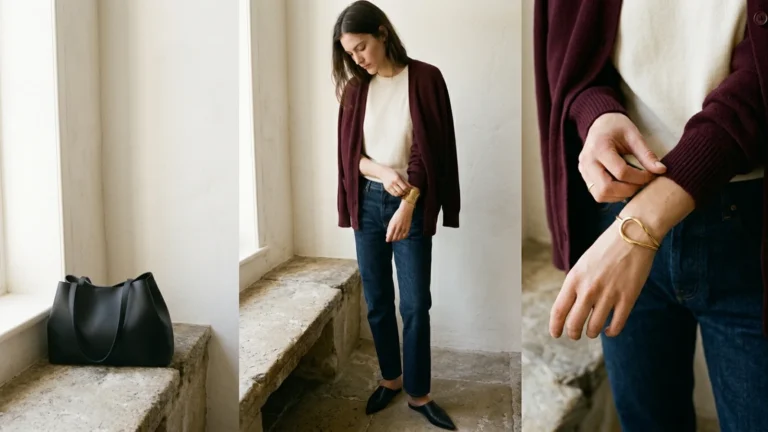
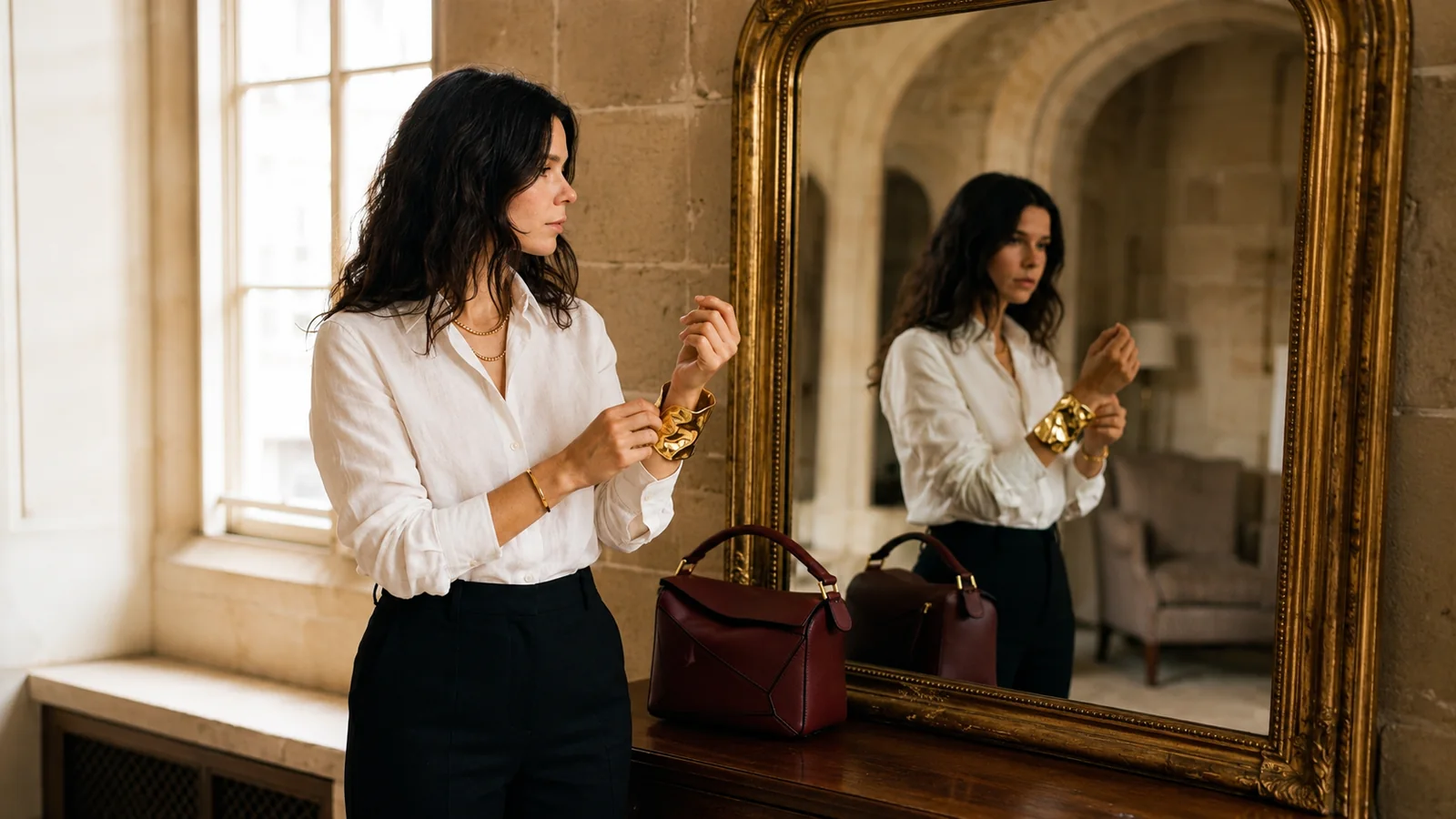
It remains dark enough to sit comfortably beside black, but it introduces warmth and depth. The contrast is restrained rather than loud. Against gold jewelry and warm stone architecture, that burgundy begins to connect different parts of the image.
The outfit becomes richer without becoming more complicated.
This principle works well beyond black.
Charcoal can be interrupted with dark olive. Chocolate brown can sit beside pale blue. Navy becomes sharper next to oxblood. Soft grey can take an unexpected hit of butter yellow or muted red.
The point is not to add color simply because an outfit “needs a pop.”
It is to choose a color that changes the relationship between the pieces.
That is a much more useful way to think about accents.
3. Accessories Should Add Tension, Not Noise
Accessories are often described as finishing touches. That makes them sound secondary.
They are not.
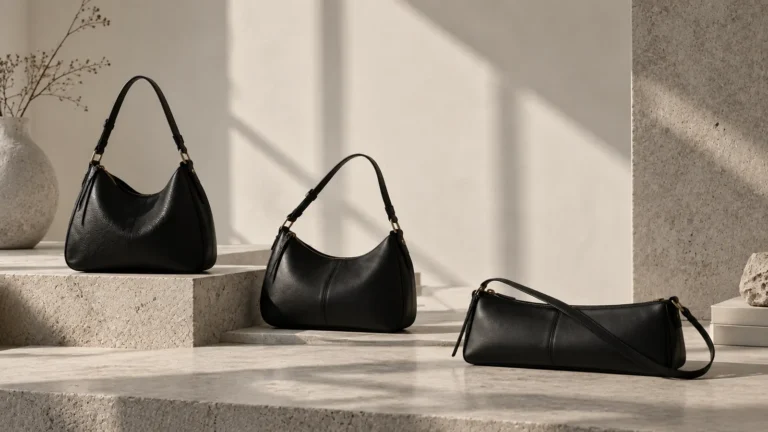
A bag can change the period an outfit seems to belong to. Jewelry can make minimal clothing feel intentional or overly decorated. Shoes can completely alter the weight and attitude of a silhouette.
The strongest accessories often introduce a slight tension.
A soft bag against a structured garment.
A substantial gold cuff beside an otherwise restrained dress.
A sculptural ring worn with something simple.
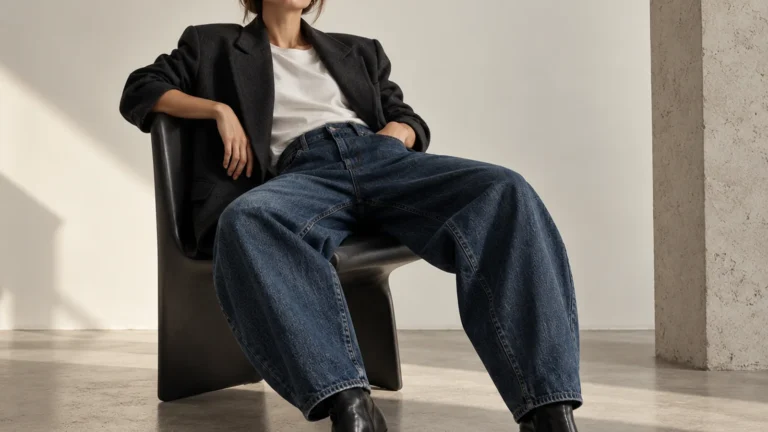
A refined shoe beneath loose denim.
That tension keeps the eye moving.
What matters is that every accessory does not try to perform the same job. When the earrings, necklace, bracelet, bag, belt and shoes are all competing to become the focal point, the outfit loses hierarchy.
Instead, allow some pieces to remain quiet.
If the bag has a strong shape or color, jewelry can be restrained. If the shoe is visually dominant, perhaps the bag does not need to be. If several pieces of jewelry are worn together, their scale can vary rather than match perfectly.
A contemporary outfit often feels less “styled” than it actually is.
That apparent ease usually comes from editing.
4. Texture Matters More Than Decoration
One of the easiest ways to make a simple outfit more interesting is also one of the least obvious in photographs: texture.
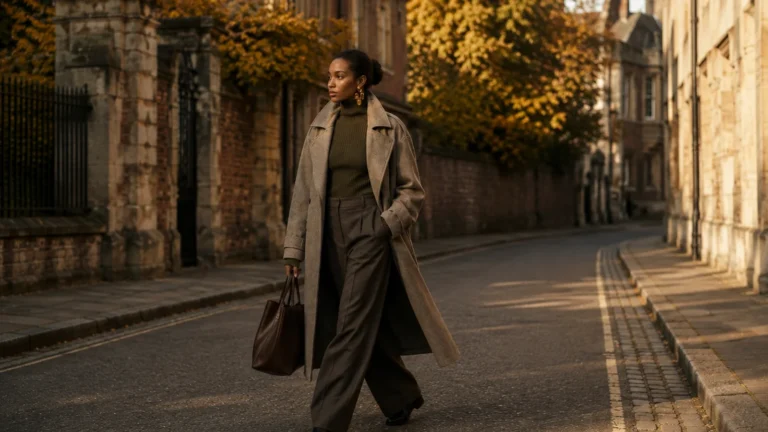
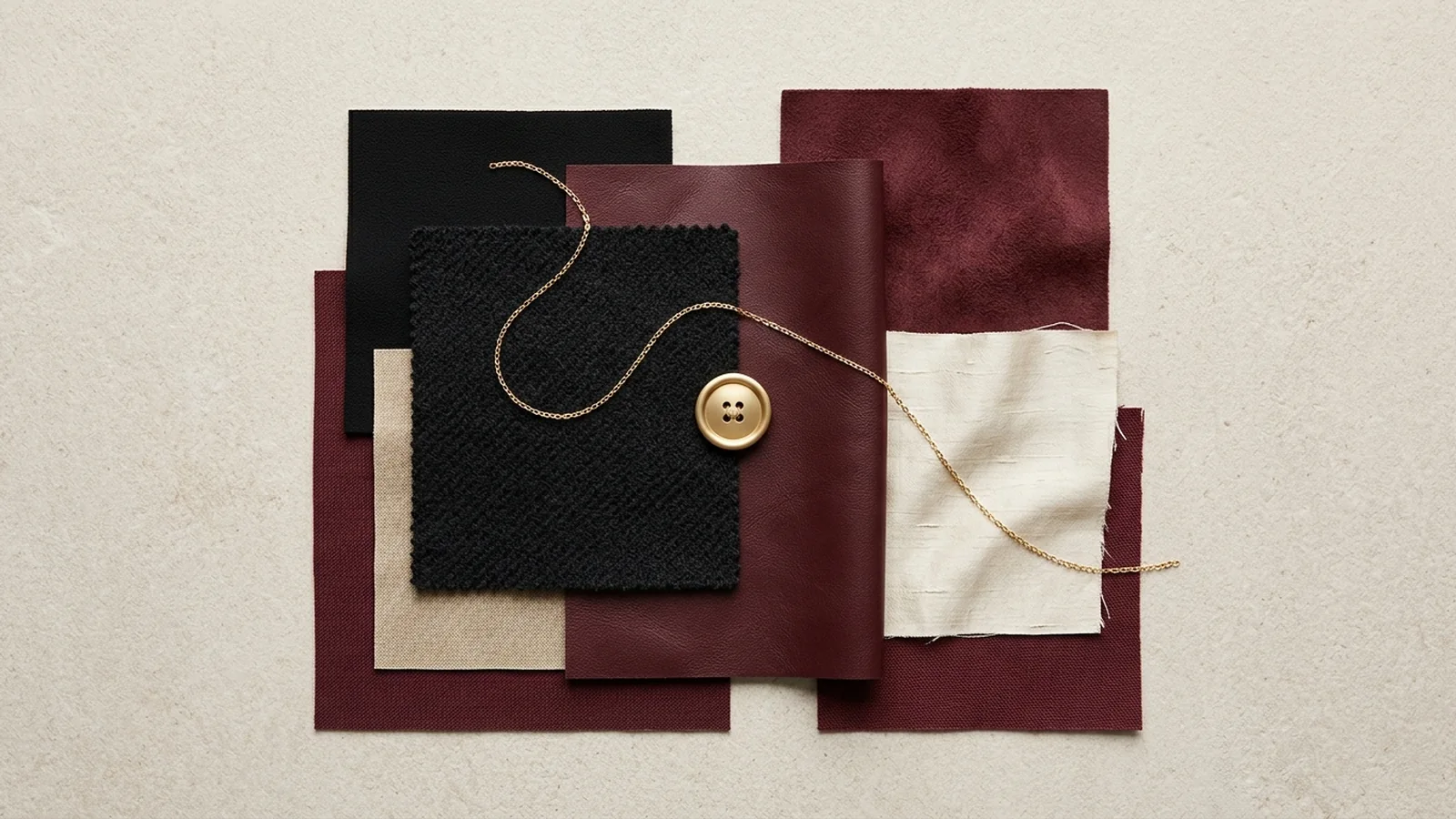
Matte fabric beside polished leather. Crisp cotton against washed denim. Fine knitwear next to smooth metal. Suede beside silk. A softly worn leather bag against a clean wool coat.
None of these combinations requires print or decoration.
Instead, the contrast happens through surfaces.
This becomes particularly useful when working with a narrow palette. An outfit built almost entirely from black, cream, brown or grey can still have enormous visual depth when the materials respond differently to light.
It is also why fabric quality has such a large effect on apparently simple clothing.
When a garment has very little embellishment, its cut, weight and surface become more visible. There is nowhere for poor construction to hide.
That does not mean everything needs to be expensive. It means texture deserves attention when choosing between two otherwise similar pieces.
Look at how the fabric falls.
Look at whether it holds or collapses.
Look at how the surface catches light.
Those qualities often matter more to the finished outfit than an additional decorative detail.
5. Proportion Is What Connects the Pieces
Individual garments can be excellent and still produce an awkward outfit together.
Usually, proportion is the problem.
A long top changes the amount of trouser we see. A large shoulder bag changes the apparent scale of a narrow dress. A substantial shoe can balance a wider trouser leg, while a delicate one may create an entirely different effect.
This is why copying an outfit piece by piece does not always reproduce the same result.
The relationship between the pieces matters as much as the pieces themselves.
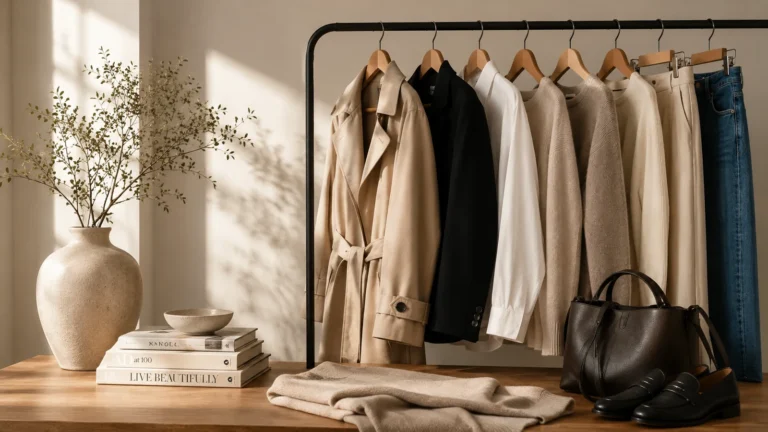
That relationship becomes much easier to manage when the wardrobe itself is built around versatile essentials.
When something feels wrong, try looking at the outfit as a set of shapes rather than clothes.
Where is the widest point?
Where does the eye stop?
How much of the body is visually divided?
Is every piece close-fitting, or is there contrast between volume and structure?
Sometimes changing one proportion is enough. Roll a sleeve. Change the length of a top. Move a bag from crossbody to shoulder. Replace a tiny shoe with something visually stronger.
These are small interventions, but they can rebalance the entire composition.
6. Familiar Pieces Need an Unexpected Element
A wardrobe built only from unusual clothes is difficult to wear.
A wardrobe built only from predictable clothes can become visually flat.
The interesting territory sits between the two.
Start with something familiar — a black dress, jeans, a white shirt, a knit, a trench — and introduce one element that is slightly less expected.
Not necessarily louder. Just less automatic.
It might be an asymmetric cut.
An unusual bag shape.
A richer color.
A different shoe proportion.
A piece of sculptural jewelry.
Or simply a styling decision that changes how a familiar garment sits on the body.
This approach has another advantage: it makes trends easier to use selectively.
Instead of rebuilding an entire wardrobe around whatever silhouette dominates a particular season, one current element can alter pieces you already own.
The result feels contemporary without becoming disposable.
7. The Difference Is Often in the Edit
There is a point in styling when adding another element stops improving the outfit.
Learning to recognize that point is useful.
Take something away and look again.
Does the outfit lose anything?
If not, the removed piece probably was not necessary.
This does not mean minimalism should become a rule. Layering, color, print and jewelry can all work beautifully in abundance. The issue is not quantity; it is whether every element contributes.
Editing is simply deciding what deserves attention.
Sometimes that means removing a necklace.
Sometimes it means replacing a safe black bag with burgundy.
Sometimes it means choosing the more unusual of two nearly identical skirts.
And sometimes it means leaving an outfit exactly as it is.
The strongest looks often contain enough information to be interesting, but enough restraint for that information to be seen.
A More Useful Way to Think About “Current”
Trying to dress “on trend” creates a moving target.
There will always be another color, another hemline, another shoe, another micro-trend arriving behind the one you have just noticed.
A more durable approach is to pay attention to the visual decisions underneath those trends.
Silhouette. Proportion. Color relationships. Texture. Accessories. Editing.
Those elements change too, but much more slowly.
Understanding them also makes it easier to decide which new ideas are actually worth bringing into your wardrobe.
You may not need the season’s most discussed shoe. But perhaps its heavier proportion explains why your existing trousers suddenly feel better with a different pair.
You may not need another dress. Perhaps what you are responding to is asymmetry, draping or a less rigid waist.
That distinction matters.
Because once you can identify what makes an outfit feel fresh, you become much less dependent on being told what to buy.
And that is ultimately a far more interesting way to dress.
ARANEMI PICK
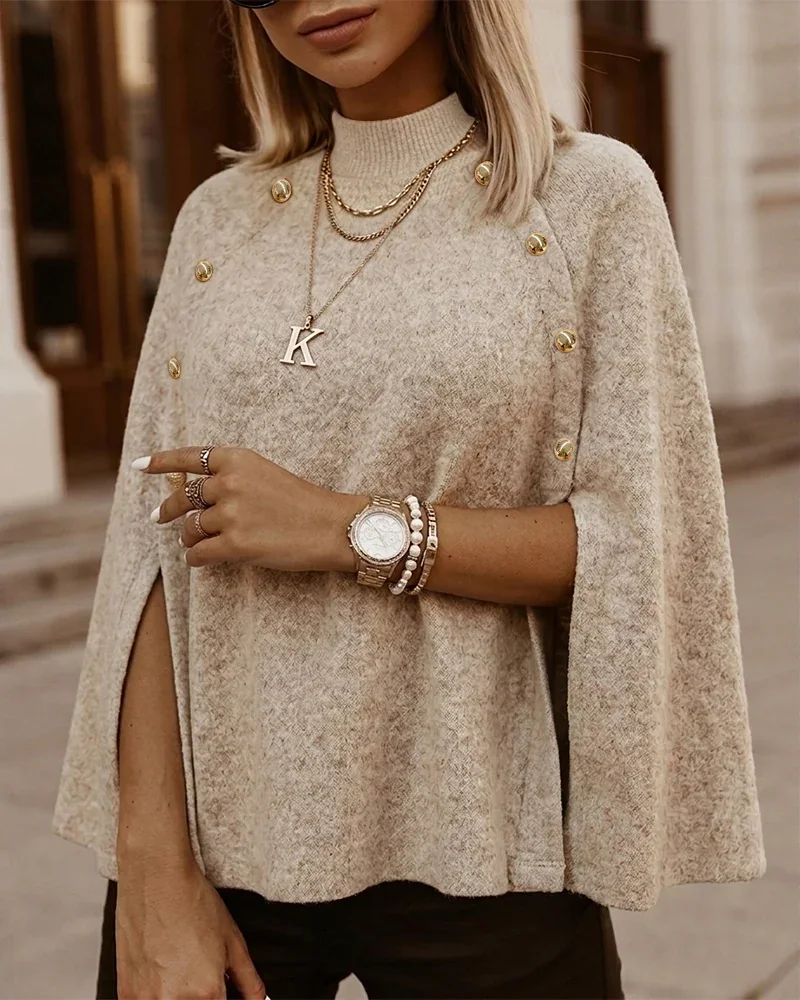
Mock Neck Cape Knit Sweater
Soft texture, a relaxed cape silhouette, and subtle gold-tone details give this knit an elevated feel without making it overly polished.
ChicMe · $38.99
Affiliate note: We may earn a commission if you purchase through this link, at no extra cost to you.